Sri Lanka Arrests 3 Locals Over Plot Against Israel Tourists

Sri Lanka Arrests 3 Locals Over Plot Against Israel Tourists

Sri Lanka has arrested three locals for planning an attack on Israeli tourists. This action comes from intelligence indicating a threat from October 19 to 23. Vijitha Herath, the country’s security minister, said the suspects were detained under the strict Prevention of Terrorism Act. This shows Sri Lanka’s commitment to keeping the nation safe.
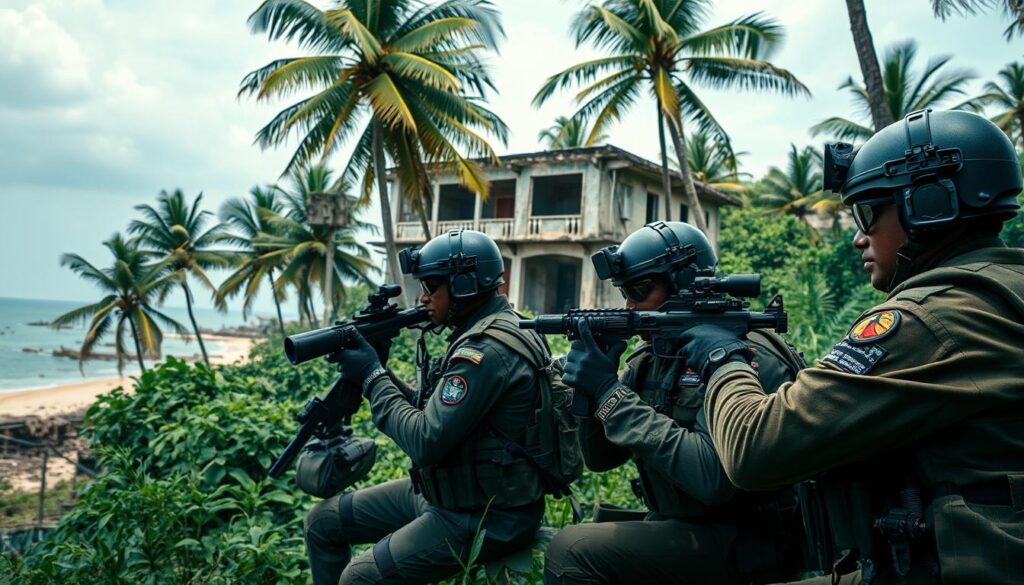
Sri Lanka says 3 locals were arrested over a possible attack on Israel tourists

Before these arrests, there was a big increase in military and police in the area. Around 500 officers were placed around Arugam Bay, a top tourist spot in Sri Lanka. The country is still healing from the 2019 Easter Sunday attacks which hurt its tourism industry badly.

Despite anti-Israel protests by some local Muslims and boycott calls on social media, Sri Lanka promises to protect all tourists. They have heightened security, especially in southeastern resorts. This is part of their plan to show Sri Lanka is safe and open to all visitors from around the world.

Key Takeaways

  • Sri Lanka’s response to the proposed attack on Israeli tourists, ensuring vigilant counter-terrorism operations.
  • Empowered security protocols in tourist locations, safeguarding guests during the peak tourism season.
  • Strategic cooperation between local and international intelligence agencies resulted in the timely arrests of the suspects.
  • Authorities’ initiative to set up a tourist hotline for reporting suspicious activities, indicating proactive crisis management.
  • Dedicated diplomatic dialogues to lift travel advisories reflecting Sri Lanka’s commitment to transparency and security amidst global scrutiny.

Background and Details of the Arrest in Arugam Bay

Arugam Bay, known for its beauty, has faced a tough situation. Three Sri Lankans were arrested for plotting against Israeli tourists. This reveals the ongoing risk of terrorism from global conflicts and extremist groups.

The OMP Sri Lanka says the suspects were linked to the conflicts in Gaza and Lebanon. The arrests happened thanks to information shared between countries. This shows how vital international collaboration is in preventing attacks by radical groups.

Information on the Suspects and Connection to International Conflicts

One suspect had previously fought in Iraq, showing the global aspect of this threat. They targeted the Chabad House in Arugam Bay, aiming to stir religious and ethnic conflict. The quick action of international and local forces points to strong teamwork against terrorism.

Sri Lanka’s Commitment to Tourist Safety Post-Economic Crisis

After the incident, Sri Lanka increased patrols and security checks in tourist areas. They are dedicated to keeping their tourism safe, vital for their economy. They even started a hotline for tourists to report any suspicious activities.

Impact on Sri Lanka’s Tourism and International Relations

The attempted attack has challenged Sri Lanka’s reputation as a safe place for tourists. Yet, their quick response has helped manage the impact. International advice acknowledges their actions, maintaining trust among travelers and partners. It’s crucial to keep up security cooperation to support Sri Lanka’s tourism and economy.

This incident underlines the need for ongoing global cooperation to tackle security risks. Protecting economic interests and people depends on stopping extremist threats. Sri Lanka’s approach strengthens its security and helps global peace and stability efforts.

Sri Lanka says 3 locals were arrested over a possible attack on Israel tourists

Sri Lanka has taken action by arresting three people. This was due to fears of an attack on Israeli tourists in Arugam Bay. The government is trying hard to manage crises and keep tourists safe. This is especially important with current global travel warnings.

Tension Between Local Muslim Community and Israeli Tourists

Arugam Bay has a history of conflicts. Lately, geopolitical issues have heightened tensions. This prompted the authorities to work more with other countries in stopping terrorism. Even though Israeli tourists make up a small 1.5% of visits since 2024, they are very important. They help the economy a lot, especially in places like Arugam Bay.

Intelligence Tips and Proactive Security Measures by Sri Lanka Police

The Sri Lankan police have increased their efforts for safety. They have more soldiers and police patrolling areas where tourists visit. This is because they received strong tips. About 500 security people are now working hard to manage crises. They recently caught three locals because of this effort.

International Warnings and Evacuations Following Credible Threats

Travel warnings were given by the U.S. Embassy and Israel’s security council. This situation led to fewer Israeli tourists in Arugam Bay. Some left due to these warnings. A few stayed by the time the arrests happened. Sri Lanka is really focused on keeping tourists safe. This shows their commitment to working together on security with other countries. You can read more about it here.

IMF $2.9B Bailout for Sri Lankan Economic Stability

IMF $2.9B Bailout for Sri Lankan Economic Stability

The International Monetary Fund is throwing a lifeline to Sri Lanka during a tough financial crisis. They’ve agreed to help with $2.9 billion over four years. This plan aims to make Sri Lanka’s economy stable and set the stage for growth.

Sri Lanka is dealing with over $51 billion in foreign debt. With IMF’s help, they’re working on getting their economy back on track. This involves making big changes in taxes and energy prices, increasing social spending, and fighting corruption. These steps are vital for stabilizing the economy and helping everyone in Sri Lanka.

IMF Approves $2.9 Billion Bailout to Stabilize Sri Lankan Economy

With the IMF’s support, Sri Lanka is taking steps towards managing its finances better and eyeing sustainable growth. Despite a projected economic downturn and rising inflation, the country is focusing on important reforms. They are improving social security, attracting more investors, and making strong international partnerships to bounce back stronger.

IMF Approves $2.9 Billion Bailout to Stabilize Sri Lankan Economy

IMF Bailout for Sri Lanka

The International Monetary Fund (IMF) has approved $2.9 billion to help Sri Lanka. This step is crucial for economic stability. It aims to end the serious financial crisis in the nation.

This bailout is part of a four-year plan. It will help the country recover economically. It also ensures long-term financial and economic health.

The Extended Fund Facility: A 48-Month Road to Recovery

The IMF’s program will last 48 months. It focuses on managing government debt, ensuring fiscal sustainability, and improving social welfare. These efforts aim at economic stability.

An immediate $333 million will help stabilize the local currency. It tackles the ongoing economic crisis.

Conditions and Expectations from Sri Lanka

Strict IMF conditions require major fiscal efforts. This includes wider tax bases and more progressive income taxes. Higher corporate and VAT taxes will boost government revenue.

The plan also involves cutting energy subsidies. Increasing tariffs will help offset the impact of government debt.

The Crucial Role of Debt Restructuring and Creditor Cooperation

IMF bailout success relies heavily on debt restructuring and creditor cooperation. With over $50 billion in external debt, talks with key creditors like China and India are vital.

Achieving agreements with major creditors and following IMF’s conditions are key. They will largely determine the economic recovery’s success.

Indicator Current Status Projected Improvement
Inflation Rate 60% Stabilize to
GDP Growth -7.8% Positive Growth by 2025
Fiscal Deficit 9.8% of GDP 2.3% of GDP by 2024

If followed well, this bailout plan could lead Sri Lanka out of crisis. It promises a stable and brighter future. The commitment from Sri Lanka and creditors shows a shared hope for recovery and lasting stability.

Sri Lanka’s Economic Turmoil: How Did We Get Here?

Sri Lanka’s economy is in a deep crisis, shaken by bad local management and worldwide problems. The country couldn’t pay back nearly $7 billion in foreign loans this year. This shows how serious Sri Lanka’s economic crisis is.

In 2022, things got worse as the economy was expected to shrink by 8.7%. The financial crisis caused inflation to jump over 60%. This downturn stopped growth and caused big shortages in fuel and medicine, hurting people’s lives.

The COVID-19 pandemic made the financial issues worse. Then, the global financial crisis caused by the conflict in Ukraine hit. It affected Sri Lanka’s tourism income and heightened food security issues, adding stress to the fragile economy.

The previous Rajapaksa government was blamed for corruption and poor economic handling. Their actions led to public anger. Ultimately, this anger forced President Gotabaya Rajapaksa out of office.

Aspect Status Before Status After Impact
Foreign Debt $51 billion Repayment suspended for nearly $7 billion Escalated financial crisis
Inflation Rate Stable Peaked at 69.8% in September 2022 Increased cost of living
Economic Growth 5% (2015) Contracted to -8.7% (2022) Reduced national income and increased poverty
GDP from Tourism Stable contributor Significantly reduced due to global conflicts Loss of major revenue source

Looking at these facts, we see the complexity of Sri Lanka’s Economic Turmoil. It’s made worse by bad policies at home and tough global challenges.

Reforms and Measures: Sri Lanka’s Path to Economic Resurgence

Sri Lanka is working hard to bounce back from tough times. Their plan involves a set of Economy Reforms, aiming for stronger financial stability. The government is teaming up with the International Monetary Fund (IMF). They’re setting into motion a plan to boost Fiscal Measures. This is key to sparking an economic comeback.

One main goal is to increase government revenue. They aim for it to hit about 15% of the Gross Domestic Product (GDP) by 2025. This is a big jump that hopes to reduce the inflation rate. The plan also includes making tax reforms more effective.

The IMF is playing a big part in Sri Lanka’s efforts to stabilize. They have already provided around $1 billion in bailout funds. This includes $336 million given after a positive second review. The funds are aimed at tackling some big challenges. These include improving revenue collection and growing reserves.

Reforming tax regulations is also on the agenda. The aim is to make tax exemptions more transparent and limited. However, the success of these reforms depends on keeping up the momentum. There’s a risk if policies are not consistent.

There’s a bit of hope in the current economic forecasts for Sri Lanka. The country’s debt compared to its GDP is expected to fall. It should move from 128 percent to just over 100 percent by 2028. Economic growth of 2.2 percent is predicted for 2024.

There is also an expected slight surplus in fiscal balance. This marks a turning point from the brink of economic disaster. Sri Lanka’s journey to financial stability will be tough. It will require a lot of hard work on the reforms and measures in place. Nonetheless, with focused efforts and global support, the country is striving to move towards a future of financial health and prosperity.

Central Bank Digital Banking Framework Boosts Inclusion

Central Bank Digital Banking Framework Boosts Inclusion

Sri Lanka’s Central Bank Digital Banking Framework aims to boost financial inclusion. It uses digital tech and innovative payment solutions. The goal is to bring unbanked people into the formal financial system.

The framework supports fintech innovations and digital payment systems. It promotes interoperability among platforms and strengthens consumer protection. These efforts build trust and encourage adoption of digital banking services.

Central Bank Introduces Digital Banking Framework to Enhance Financial Inclusion

Success depends on a strong payment system infrastructure. This ensures smooth integration between traditional and digital banking. Collaboration among financial institutions, tech providers, and regulators is vital.

The framework empowers citizens with affordable, convenient financial services. It bridges the digital divide and promotes financial literacy. This initiative can uplift lives and boost economic growth.

Key Takeaways

  • The Central Bank Digital Banking Framework aims to enhance financial inclusion in Sri Lanka through digital technologies and innovative payment solutions.
  • The framework creates a supportive environment for fintech innovations, promoting interoperability and strengthening consumer protection.
  • Establishing a robust payment system infrastructure is crucial for the success of the digital banking framework.
  • Collaboration among stakeholders is essential in driving the digital transformation of the banking sector.
  • The initiative has the potential to empower citizens with access to affordable and convenient financial services, contributing to economic growth.

Central Bank Introduces Digital Banking Framework to Enhance Financial Inclusion

Sri Lanka’s Central Bank has launched a new digital banking framework. This move aims to boost financial inclusion and drive economic growth. The framework encourages innovation while protecting consumers and maintaining financial stability.

The Role of Central Bank Digital Currency (CBDC) in Promoting Financial Inclusion

CBDCs offer a safe, digital way to pay. They can help more people join the formal financial system. A 2022 BIS survey shows 93% of central banks are exploring CBDCs.

The Central Bank of Sri Lanka’s framework paves the way for CBDC adoption. This could greatly improve financial inclusion efforts in the country.

digital banking framework

India’s Progress in Digital Payment Systems and Its Impact on CBDC Implementation

India’s success with digital payments offers valuable lessons for Sri Lanka. Mobile wallets and telco-based systems are widely used in India. This success could smooth the way for CBDC implementation.

Most central banks see value in having both fast payment systems and CBDCs. Sri Lanka can learn from India as it moves towards a cashless society.

Addressing Challenges in CBDC Adoption for Financially Underserved Populations

CBDCs can boost financial inclusion, but challenges remain. Low literacy and complex systems can hinder adoption. The new framework focuses on consumer protection and data privacy.

Caps on CBDC holdings and clear rules aim to create a safe environment. These measures will help ensure widespread adoption of digital currencies.

The National Digital Transformation Initiative supports the Central Bank’s efforts. It invests in digital infrastructure and skills development. This initiative aims to create a thriving digital economy for all.

Sri Lanka’s progress in digital banking is promising. The Central Bank’s framework lays the groundwork for greater financial inclusion. It also sets the stage for sustainable economic growth in the country.

Key Components of the Digital Banking Framework

The digital banking framework has several key components. These elements promote financial inclusion and enhance banking experiences. Together, they create a robust and accessible digital banking ecosystem.

Establishing a Robust Payment System Infrastructure

A strong payment system infrastructure is crucial for digital banking. It ensures smooth transactions and reduces costs. This leads to increased user acceptance.

The World Bank’s 2017 Global Findex report shows significant progress. Between 2010 and 2017, 515 million adults acquired a financial account. This highlights the importance of accessible payment systems.

An effective payment system depends on several factors. These include merchant and consumer acceptance, supporting infrastructure, and cost-effective legislation. These elements are vital for mass adoption.

  • Acceptance by merchants and consumers
  • Infrastructure to support the system
  • Legislation to ensure cost-effectiveness and mass adoption

Enabling Interoperability Among Digital Payment Platforms

Interoperability is key for digital payment platforms. It allows smooth transactions across various systems. This enhances user experience and promotes widespread adoption.

Multi-CBDC (mCBDC) arrangements coordinate national CBDCs. They play a vital role in enabling interoperability. These arrangements align regulatory frameworks, practices, and messaging formats.

Country CBDC Status
The Bahamas Launched in December 2020
Nigeria Launched in 2021
Jamaica Launched in 2022
China Conducting large-scale pilot
Brazil Actively piloting CBDC project
India Actively piloting CBDC project

Strengthening Consumer Protection and Data Privacy Regulations

Digital banking’s growth makes consumer protection and data privacy crucial. Strong regulations in these areas protect users’ interests. This helps maintain trust in the digital banking ecosystem.

The Central Bank has released new regulations. These enable market conduct monitoring to ensure effective financial consumer protection. This step further strengthens the digital banking framework.

Key aspects of protection in digital banking include fair treatment and secure data handling. Clear communication and efficient dispute resolution are also important. These measures safeguard users in the digital banking environment.

  1. Transparent and fair treatment of consumers
  2. Secure handling and storage of personal data
  3. Clear communication of terms and conditions
  4. Efficient dispute resolution mechanisms

Conclusion

Digital banking frameworks from central banks could revolutionize financial inclusion in Sri Lanka and India. This framework can offer secure, accessible payments for everyday transactions. The impressive performance of Sri Lanka’s stock highlights the country’s economic growth and strong corporate governance.

Success depends on robust payment infrastructure and interoperable digital platforms. Consumer protection and data privacy regulations are also crucial. Over 75% of sub-Saharan African countries are researching CBDCs.

A quarter of these nations plan to launch CBDCs by 2028. Financial inclusion and efficient domestic payments drive CBDC adoption. Mobile money services are already popular in the region.

Central banks must balance financial inclusion with system stability. Collaboration with organizations like the IMF can help address CBDC adoption challenges. A well-designed framework can bridge gaps between the underserved and formal banking.

This approach could contribute to sustainable economic growth and development. It has the potential to create a more inclusive financial landscape for citizens.

Bus Accident in Badulla: Two University Students Dead, 39 Injured

Bus Accident in Badulla: Two University Students Dead, 39 Injured

In a tragic incident on the Mist-laden roads of Badulla, a road accident highlighted Sri Lanka’s road safety issues. Early morning, on the Badulla-Mahiyangana highway, a bus filled with young dreams had a terrible accident.

General Sir John Kotalawala Defence University (KDU) is grieving the loss of two students. This accident is a sharp reminder of how uncertain road travel can be. The bus accident in Badulla shocked the nation, with 39 injured fighting for their lives in Badulla Hospital.

The accident happened around 7:45 a.m. between the third and fourth-kilometer posts. The bus, carrying KDU members, went off the road. This raises concerns about vehicle safety and road conditions. On board were university students dead, teachers, and military personnel who faced a horrific incident as the bus crashed.

Bus Accident in Badulla: Two University Students Dead, 39 Injured

Local people and emergency teams worked hard to help the injured. Ambulances rushed the victims to Badulla Teaching Hospital for urgent care. Six seriously hurt people are in the ICU. Others are getting ready for surgery.

Early findings suggest a technical problem caused this tragic event. Sri Lanka news is keeping everyone updated. OMP Sri Lanka is working hard to uncover the truth behind this sad story.

The Response to the Bus Crash: Rescue Efforts and Medical Treatment

Right after the tragic bus crash in Badulla, rescue efforts began quickly. The Badulla Municipal Fire Brigade and local emergency services joined forces. Their prompt action helped reduce harm and get the injured help fast.

Emergency Services’ Swift Action

The emergency teams responding to the bus crash were from different units. This included the local police and the army. They worked with the fire brigade to secure the site and help victims. Their quick and efficient efforts meant survivors got the help they needed without delay.

Hospitalization and Treatment of the Injured

A total of 39 victims received transport to the Badulla hospital. They had injuries ranging from minor to critical. Dr. Palitha Rajapakse led the medical team into action. Eight patients needed intensive care, which shows the crash’s severity.

Investigations into the Cause of the Accident

Early investigations point to brake failure as the cause of the crash. Authorities are still looking into it. They want to find out exactly what happened. This will help prevent similar accidents in the future.

In other news, financial stability measures are helping the country’s economy. This includes the Sri Lankan Rupee growing stronger against the US Dollar. Such growth can help improve public safety with more funding and better emergency services.

Badulla Bus Crash

Event Details
Bus Crash Victims hospitalized 39
Immediate Fatalities 2 university students
Critical Condition 5 admitted to ICU
Investigation Cause Brake failure suspected

Following this disaster, Sri Lanka is showing commitment to safety in different sectors. This includes collaborative projects like the one between the FAO and Norway to enhance fisheries. It demonstrates a national effort to improve readiness for emergencies.

Impact on the University Community: Sir John Kotalawala Defence University Mourns

The tragic bus accident in Badulla has greatly affected the Sir John Kotalawala Defence University. Two members of our university have died, and 39 students are injured. The university is now a place of deep sorrow and mourning.

The sadness reaches across students from all over the country. They are united in their grief and support for each other during this tough time. It’s a moment for remembrance and collective healing.

The university is closely looking after the injured students. We are ready to help them heal, both body and mind. The tragic accident has made us think about how to keep students safe on future trips and activities.

We’re dedicating ourselves to enhancing student safety measures. It’s crucial not just to mourn but to learn and improve protection for our students.

Despite the tragedy, Sri Lanka continues to push forward. The partnership between FAO and USAID marks progress in agriculture for the country. This reflects the nation’s commitment to thriving and overcoming challenges.

As the Sir John Kotalawala Defence University grieves, it remains part of the national effort. Together, we strive for resilience and growth amidst adversity.

Sri Lanka’s T10 Cricketer Selection Set for Nov 10, 2024

Sri Lanka’s T10 Cricketer Selection Set for Nov 10, 2024

Sri Lanka is gearing up for a major event in its sports calendar. The cricketer selection for the first-ever Lanka T10 Super League will take place on November 10, 2024. It will happen in the lively city of Colombo. This event is crucial for setting up the player draft. It’s a key step for the big tournament in December.

There’s a plan to strengthen the Sri Lankan cricket team. Franchises will pick players to make teams fit for the quick T10 cricket 2024 games. They can choose between 15 to 17 players, aiming for victory. This follows the orderly processes of player registration and signings. It’s all part of a well-planned sports event scheduling.

Key Takeaways

  • A total of 6 teams participating in the Lanka T10 Super League.
  • Franchises to draft between 15 to 17 players for their squads.
  • A rigorous 11-round player draft process.
  • Crucial category ‘A’ and ‘B’ players to be selected at pre-set prices.
  • Deadline for player registration and direct signings ahead of draft day.
  • Each franchise must sign six players directly before the draft commences.
  • Inaugural tournament showcases the combination of local talent and international cricketers.

Insight into the Inaugural Lanka T10 Super League

The inaugural Lanka T10 Super League is kicking off in December 2024. It is a big step forward in Sri Lanka’s cricket world. It combines local and international cricket stars under the banner of Sri Lanka Cricket. This tournament focuses on the fast-paced Lanka T10 cricket format. It features six T10 Super League franchises.

The league has a detailed plan with eleven drafting rounds. Every team can pick their players to create strong lineups, following Sri Lanka Cricket’s rules. Each team can have 17 players, but at least 15. This mix of veteran skills and new talent draws attention worldwide. Check OMP Sri Lanka’s official site for more on Sri Lanka’s tech advancements.

  • Franchise Organization: Six teams compete, selecting players in 11 rounds.
  • Player Category and Pricing: Bidding starts at USD 35,000 for the best players, with prices adjusting in later rounds. Newcomers can be bought for as low as USD 2,500, showing the league’s focus on nurturing new talent.
  • Schedule and Duration: The action spans from December 12 to December 22, 2024. It promises to keep audiences engaged with its brief yet packed schedule.
  • Strategy and Selection: Teams are built strategically, adhering to strict rules. This approach aims at diversifying the game and boosting competitiveness.

The inaugural Lanka T10 Super League is ready to change the game in the region. It offers a stage for emerging cricket stars, thanks to Sri Lanka Cricket. The excitement for this new league is huge. It puts Sri Lanka on the cricket world map and promotes the T10 format.

Sri Lanka’s T10 Cricketer Selection Scheduled for November 10, 2024

The cricketer selection process for the 2024 Sri Lanka T10 tournament is robust. It aims to boost the competitive spirit and cricket quality. This process meets strategic T10 selection criteria and guarantees a fair player draft on November 10, 2024, in Colombo.

The Drafting Process and Selection Criteria

The Sri Lanka T10 franchise teams will conduct an 11-round draft, mixing manual draws with algorithms. The first round targets local and global top talent via manual draw, each valued at US$35,000. Later rounds use technology to ensure fair play. Union Assurance backs this method, promoting tech in professional fields.

Anticipation for the Rescheduled Tournament

Excitement builds for Sri Lanka’s T10 cricket, now set for December 2024 after a delay. The community and stakeholders are eager for the December 12 to 22 matches. This delay aims to improve logistics and participant experience, promising an unforgettable cricket event.

Strategic Signings and Registration Deadlines

Timelines for T10 player registration and signings are critical as the Lanka T10 Super League approaches. Teams have until November 1, 2024, to register players, with direct signings due by November 5. Franchises can secure up to six players directly, preparing for a strong team formation. These cricket registration deadlines ensure league readiness and team competitiveness.

The 2024 Sri Lanka T10 tournament promises to change how cricket is played in the region. By sticking to strategic T10 cricket signings and focusing on team balance, it’ll bring exciting cricket to fans worldwide.

Impact and Expectations from the 2024 Sri Lanka T10 Tournament

The 2024 Sri Lanka T10 league is going to change cricket in the nation big time. It aims to highlight how exciting T10 cricket can be. With its short and energetic matches, it will pull in many fans. This change is set to make cricket even more popular. It will also showcase the talent from both local and international players.

This tournament is marking a big change in cricket. It introduces a new setup for women’s cricket and ensures men and women get paid the same. These steps show cricket is becoming more fair and inclusive. The 2024 Sri Lanka T10 league is part of bigger efforts to make cricket stand for equality. Efforts include getting more kids into cricket and having more diversity in cricket boards.

Thinking about the 2024 Sri Lanka T10 league brings up thoughts of new talent shining. Thanks to groups like Chance to Shine and the South Asian Cricket Academy, cricket is reaching more kids. This means the Sri Lanka T10 tournament will have lots of new talent. OMP Sri Lanka promises to keep everyone updated with the latest news. They are dedicated to reporting the positive impact of this league on cricket.